
Is selling on Etsy worth it in 2026? Fees, pros, and cons

Yes, selling on Etsy is worth it because of its low startup costs and its large audience. This is what I’ve learned after selling vintage ’90s band tees on the marketplace for years. I’ll show you how to make Etsy worth it if you offer unique goods and know how to calculate profit.
My quick 30-second verdict
Yes, Etsy is worth it for selling handmade goods, vintage items, and craft supplies. But be prepared to pay higher fees and follow the platform’s strict listing rules.
Selling on Etsy: Pros
The following 4 pros make Etsy worth it for specific seller types:
Pro #1: Handmade and vintage audience
Etsy attracts shoppers specifically searching for handmade, vintage, and creative items. Sellers often see stronger sales on Etsy because shoppers come to the site looking for unique items. Buyers expect handmade or one-of-a-kind products, which makes them more willing to make a purchase.
This setup works well if you’re a maker, vintage seller, or small business owner. It helps you reach buyers who care about quality and unique items.
Pro #2: Global reach and visibility
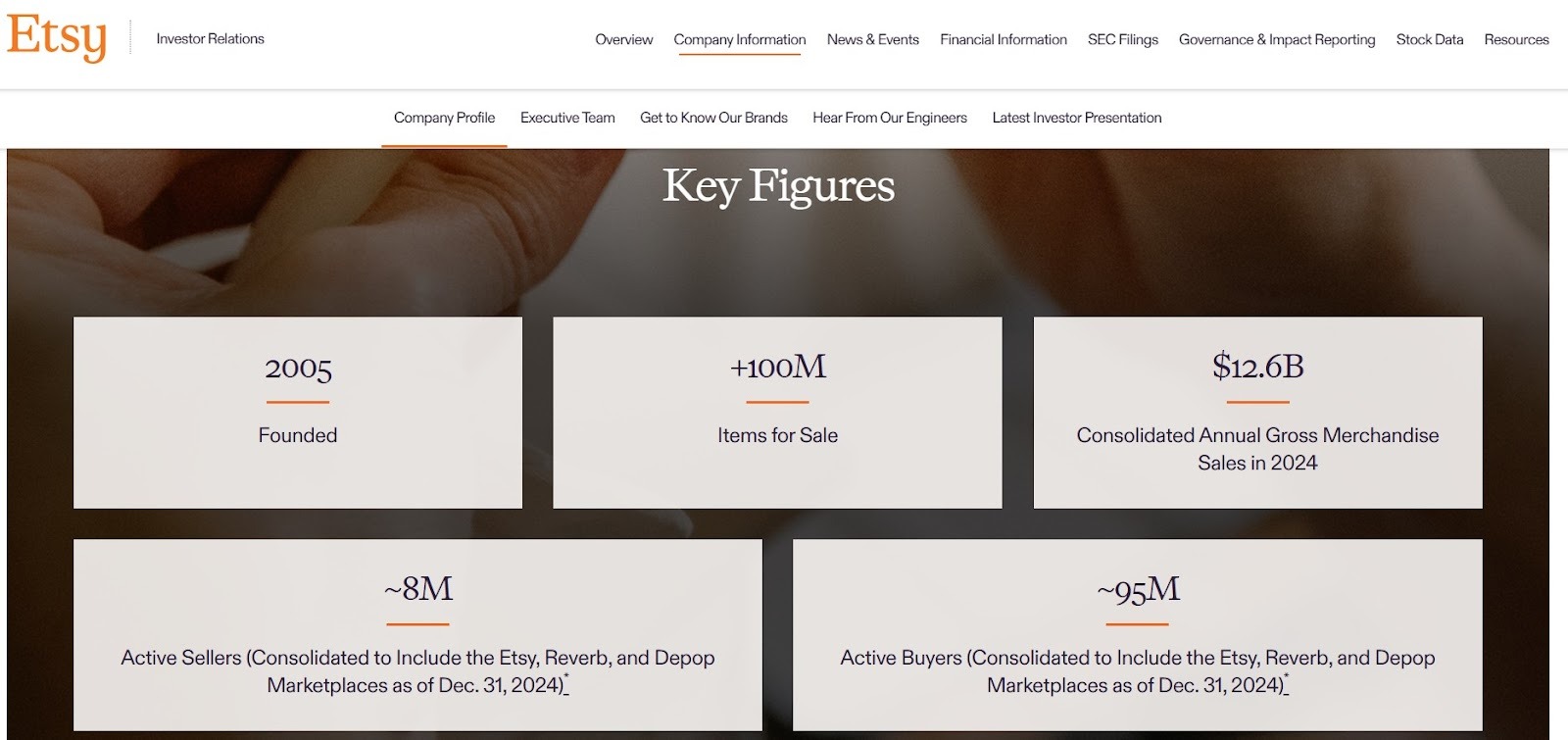
Etsy connects 5.6 million active sellers with 86 million active buyers in more than 200 countries. The platform includes tools like currency conversion, tax support, translated pages, and automatic customs forms.
These tools help small sellers reach buyers around the world. Sellers can ship internationally without managing complicated rules or paperwork on their own.
The platform also drives external traffic through off-site ads on Google, Facebook, Instagram, and Pinterest. You can opt out of these ads if your shop makes under $10,000/year.
Pro #3: Ability to sell digital products and renewals
You can sell digital goods like printables, templates, artwork, and downloadable files. These products scale easily because you create them once and sell them repeatedly without managing inventory.
Selling these products also lets you avoid shipping, storage, and fulfillment costs, which can significantly improve profit margins.
Pro #4: Low startup costs
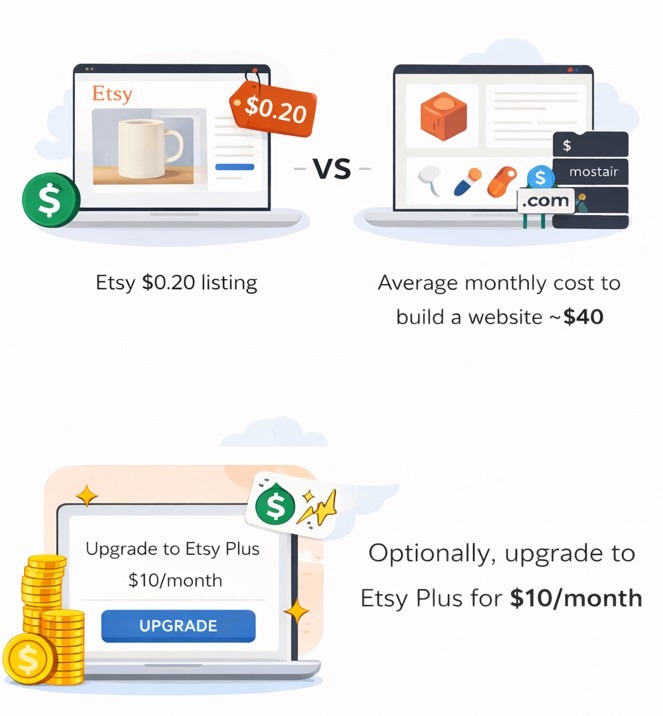
Etsy is easy to start because it charges only $0.20 per listing in your shop. This lets you test different product ideas without spending much money.
Compare this price with building your own website. You would need to pay for design, hosting, and a domain name before making your first sale.
And if you want selling tools like restock request alerts and an internal data tool to help you identify trends and optimize listings, you can upgrade to Etsy Plus for $10/month. The upgrade is optional.
Selling on Etsy: Cons
Etsy isn’t worth it for all sellers. Here are the 3 major cons of the platform:
Con #1: High fees that reduce profit margins
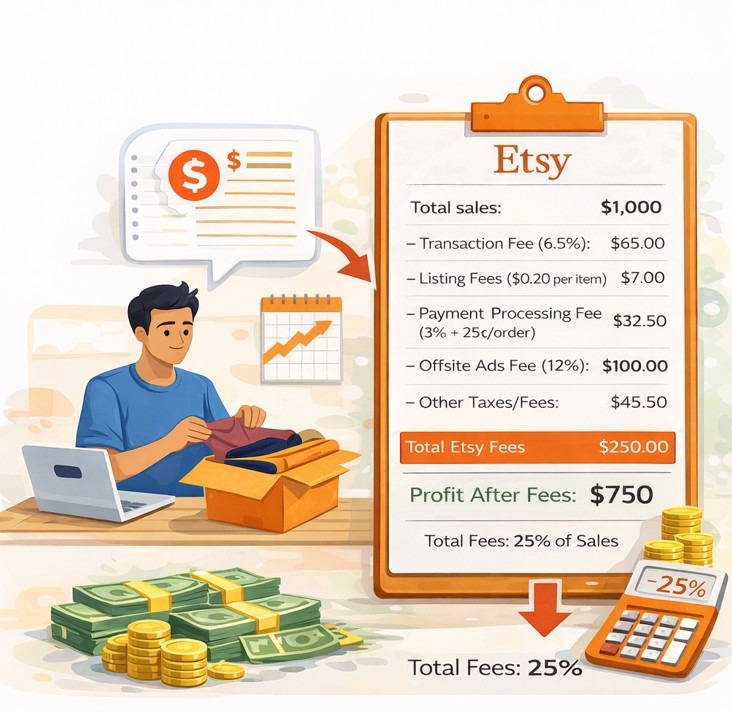
Etsy charges several fees on each sale, and they can reduce your profit. The platform takes a 6.5% transaction fee on the item price, shipping, and gift wrap, plus a $0.20 listing fee per item. Sellers also pay a payment processing fee, which in the U.S. is usually 3% plus $0.25 per order, though rates vary by country.
If your shop makes more than $10,000 in sales over a 12-month period, Etsy requires you to pay for Offsite Ads. Offsite Ads carry a fee of 15% (optional) for shops under $10,000/year in sales, or 12% (mandatory) for shops at or above $10,000/year; capped at $100 per order.
When you add listing fees, transaction fees, payment processing, and extras like taxes or currency conversion, total fees often reach about 20% of the sale price.
Con #2: Heavy competition in popular niches
Millions of sellers offering handmade items, vintage goods, and craft supplies have flooded Etsy. As a result, new shops often struggle to gain visibility because Etsy’s search algorithm favors listings with sales history, reviews, and engagement.
With so many sellers already active, you may need to wait months before your products start appearing consistently in search results.
Con #3: Strict rules on what you’re allowed to sell
Etsy only allows handmade items, vintage goods at least 20 years old, and craft supplies. The platform doesn’t allow most mass-produced retail items or general reselling. If sellers break these rules, Etsy may remove their listings or suspend their shop. This makes Etsy more restrictive than marketplaces like eBay or Amazon.
How hard is it to sell on Etsy?
Selling on Etsy can be challenging because many sellers compete for the same buyers. Etsy’s search system often shows listings with past sales, reviews, and activity first. This means new shops may not get much visibility at the start.
Many sellers need several months of steady work before their products appear regularly in search results. Success usually requires researching keywords, improving product photos, and updating listings regularly.
If you treat Etsy like a long-term business, you have a better chance of success than if you expect quick sales after listing a few items. The platform rewards shops that add new listings often and maintain strong customer reviews.
What real users are saying about Etsy
I searched and analyzed user feedback from Trustpilot, YouTube, and Reddit to bring you other sellers’ experiences with Etsy:
Good Etsy selling experiences
- A YouTuber made $20,000/month selling simple but personalized mug designs targeted at niches like birthdays, animals, and specific occasions. (February 16th, 2026)
- An Etsy buyer who’s used the platform for 5 years praised Etsy as a diverse marketplace with reliable sellers delivering unique items consistently. (February 23rd, 2026)
Bad Etsy selling experiences
- One buyer reported repeated disappointment with Etsy orders, saying items looked better online than in person, with poorer quality, inaccurate colors, and slow shipping. (November 28th, 2025)
- An Etsy seller who’s used the platform for over 19 years vented frustration after Etsy suddenly placed a 50% payment hold on them. (December 2nd, 2025)
Profit potential
Selling on Etsy works when your profit still makes sense after fees. The real question comes down to whether the money left after all of Etsy’s fees is worth your time. Many sellers fail because they forget to include all the fees when setting prices.
Here’s a simple visual that brings to life how Etsy’s fees affect profit potential:
My personal take on selling on Etsy
I’ve sold vintage T-shirts on Etsy since 2017. Here’s what I’ve learned over the years by selling on Etsy:
Etsy’s highlights:
- Built-in SEO features: Etsy's search algorithm prioritizes handmade and vintage listings, helping your products appear in front of buyers actively searching for creative goods. I’ve learned how to optimize titles, tags, and descriptions for better visibility. If you want to learn more about SEO, read our guide.
- Engaged, high-intent buyers: Etsy attracts over 86 million active buyers specifically searching for unique, handcrafted, and vintage items. In my experience, these shoppers value authenticity and one-of-a-kind products, like my Nirvana Nevermind tour tees.
- Low barrier to entry: Etsy charges just $0.20 per listing and requires no upfront inventory investment for digital products. Launch your shop in minutes without building a website, managing hosting, or learning complex e-commerce platforms.
Etsy’s hangups:
- High transaction and payment fees: Etsy charges a 6.5% transaction fee plus payment processing fees of around 3% + $0.25 per sale. I’ve also had to pay an additional 12% for ads (even when I didn’t want to) in years when my shop exceeded $10,000 in sales.
- Strict handmade and vintage requirements: The platform only allows handmade goods, vintage items (20+ years old), or craft supplies. Because I don’t create handmade goods and have little experience with craft supplies, I can only sell vintage tees.
- Shop management adds workload: I’m constantly handling my shop’s design, layout, and appearance. Managing my Etsy shop feels like managing a website rather than an e-commerce account on a marketplace.
Top Etsy alternatives
If you’ve reached this point and decided Etsy’s not for you, worry not. Here are 5 Etsy alternatives:
- eBay: Best for sellers with varied, high-turnover inventory. It supports auctions and global shipping where sellers list items such as electronics, collectibles, used clothing, trading cards, refurbished tech, and vintage goods.
- Amazon Handmade: Best for artisans who sell handmade products and custom goods. List items such as handmade jewelry, candles, soaps, home décor, wood crafts, pottery, leather goods, and personalized gifts.
- Mercari: Casual sellers who want a simple mobile-first marketplace for everyday items use this marketplace. You can list products such as used clothing, shoes, toys, video games, collectibles, household goods, and small electronics.
- Big Cartel: Independent artists who want a simple storefront flock to this platform. Sellers commonly list items such as art prints, stickers, clothing, enamel pins, handmade accessories, and small-batch merchandise.
- Shopify: Best for sellers who want to build a branded online store and control their entire sales process. Businesses often sell items such as clothing, beauty products, supplements, electronics, accessories, handmade goods, and private-label products.
My final verdict: Who is selling on Etsy worth it for?
Etsy works best for sellers who focus on handmade, vintage, or craft-supply niches and commit to consistent shop management. The platform is a good fit if …
- You sell handmade goods, vintage, or craft supplies: You’re either already a crafter, you love vintage goods like ’90s band T-shirts, or you know how to source crafting material. Specialization in these 3 areas is crucial for building brand expertise on Etsy.
- You’re keen to master the algorithm: You're willing to use tools like eRank and Etsy's search bar to find high-volume keywords. Competition, improving listings, and aiming to satisfy buyer search intent go a long way with Etsy SEO.
- You know your profit potential: Your bookkeeping skills are under control, and you understand how all of Etsy’s fees work. This understanding lets you price items so you still make a steady profit.
However, Etsy’s not for everyone. Avoid the marketplace if …
- You sell mass-produced products: Etsy only allows handmade items, vintage goods that are at least 20 years old, or craft supplies. Generic products often struggle to get attention and may break Etsy’s rules.
- You expect instant traffic with little effort: Successful Etsy shops need regular updates and good listings. You must improve titles, use the right keywords, and respond to customers. Shops that treat Etsy like passive income often struggle to grow.
- You want full control over pricing and store rules: Etsy charges several fees and may require Offsite Ads after your shop reaches $10,000 in yearly sales. Sellers who want full control over prices, marketing, and customer information often choose to run their own store on platforms like Shopify instead.
Sell on Etsy and other platforms with Nifty
Now that you know selling on Etsy is worth it, the next step is deciding how to manage your shop while expanding your reach.
If you're ready to test Etsy or already selling there, Nifty lets you list and manage items across several platforms from one interface. You'll spend less time on busywork and more time creating products.
Here's why Nifty's so helpful:
- AI listing: Snap a pic and let Nifty's AI build a complete listing with SEO-optimized titles and descriptions, and trending hashtags. Plus, it's cloud-based, mobile-friendly, and easy to use.
- Crosslist now: With a couple of clicks, post your items across Poshmark, eBay, Mercari, Depop, and Etsy. (More marketplaces coming soon!) No copy-paste, no multi-tab juggling. It all happens in the background.
- Automatic delisting? Handled: When you make a sale, Nifty's sales detection auto-delists that item from every marketplace. Say goodbye to double-selling disasters and “sorry, it's already gone” apology messages.
- Bulk tools = no busywork: Share and relist daily with just a few clicks. Update or discount dozens of items at once. You can even schedule drafts to go live while you sleep.
- Real analytics and profits: Track sales, fees, top performers, and slow movers in one clean dashboard, so you can actually see what's working and what needs to move.
See why over 10,000 sellers already use Nifty and start your 7-day free trial.
FAQs
1. How much does Etsy take in fees?
Etsy takes a $0.20 listing fee per item, a 6.5% transaction fee on each sale, and payment processing fees are around 3% + $0.25. If your shop exceeds $10,000 in annual revenue, Etsy also requires a 12% advertising fee on sales attributed to off-site ads.
2. Is Etsy better than Shopify for new sellers?
Yes, Etsy is better than Shopify for new sellers of handmade crafts, vintage goods, and craft supplies. Etsy requires minimal setup and offers built-in traffic, while Shopify demands more technical effort and independent marketing to drive customers. However, Shopify gives you full control over branding, fees, and customer data, and the platform is more complex than Etsy.
3. Can you actually make money selling on Etsy?
Yes, you can actually make money selling on Etsy if you specialize in handmade, vintage, or craft supplies and optimize your listings for search. Some sellers report earning over $100,000 annually, though success requires time, consistent effort, and smart product selection. Most new sellers take around 3 years to establish a steady income.


.png)
.png)
.png)