
Whatnot vs. Depop: What’s the best platform in 2026?
.png)
Over the years, I’ve helped sellers choose between Whatnot vs. Depop. Whatnot fits collectibles sellers who want to host live auctions, explain products to buyers, and connect with their audience. Depop suits fashion and accessory sellers who prefer static listings found via search.
In my Whatnot vs. Depop comparison, I’ll break down fees, introduce you to typical buyer personas, and walk you through the listing experience. I’ll help you determine which platform best suits your selling style.
Whatnot vs. Depop: Differences at a glance
Whatnot suits sellers offering collectibles such as trading cards, comic books, and sneakers. It gives sellers a chance to host live auctions, but it also supports “buy-it-now” listings.
Depop fits sellers and resellers offering mainly streetwear, sneakers, and accessories to a young Millennial and Gen Z audience. The platform supports buy-it-now listings and fixed-price listings with buyer and seller offer and negotiation tools.
Whatnot: Platform overview, user base, and key features
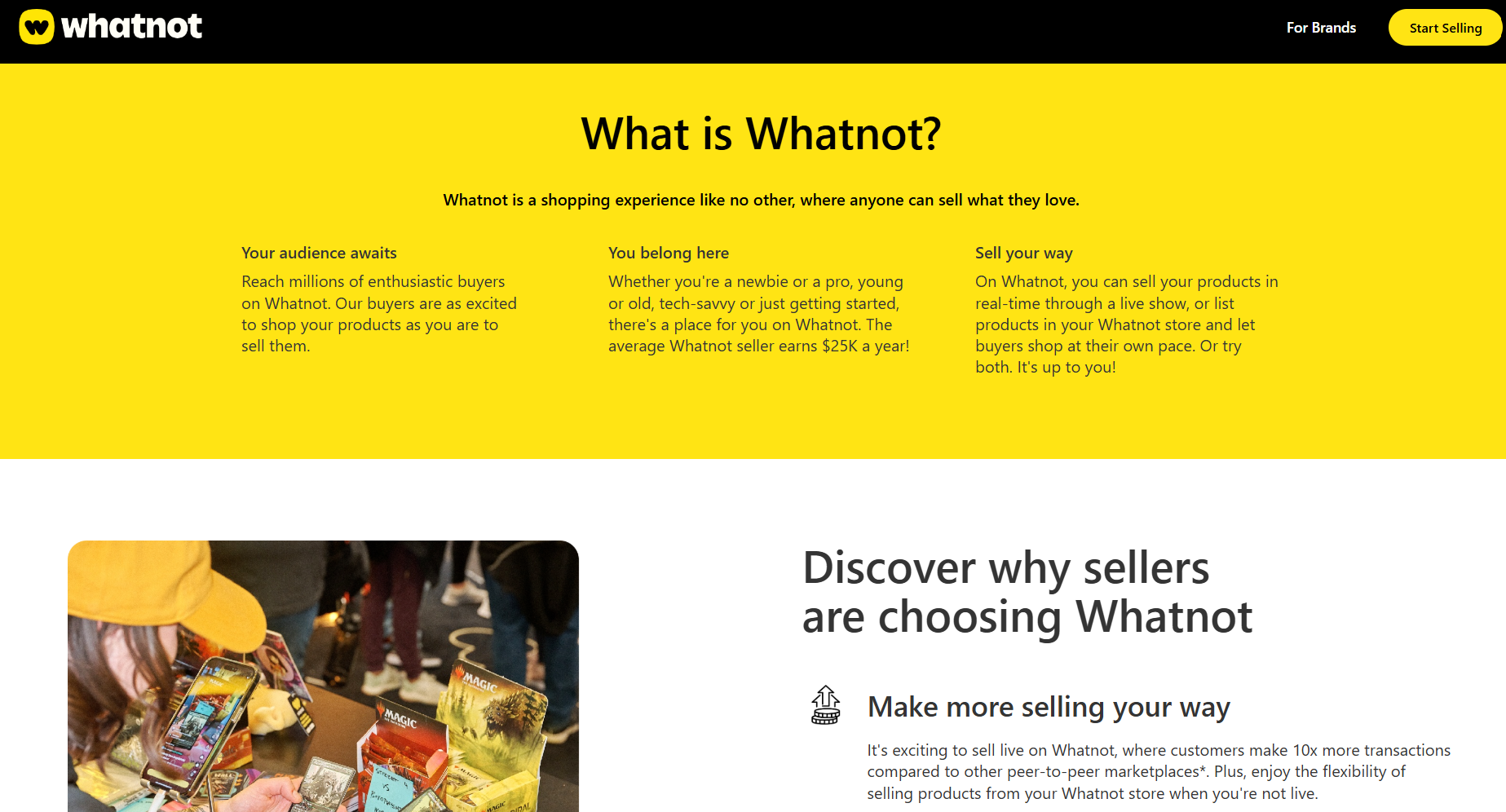
Whatnot is an online marketplace built around live shopping and auction-style selling, though sellers can also create fixed-price listings. The platform is best known for collectibles such as trading cards, sports memorabilia, and coins. You can also sell fashion, electronics, and home goods. More than 20 million accounts were created in 2025.
Depop: Platform overview, user base, and key features
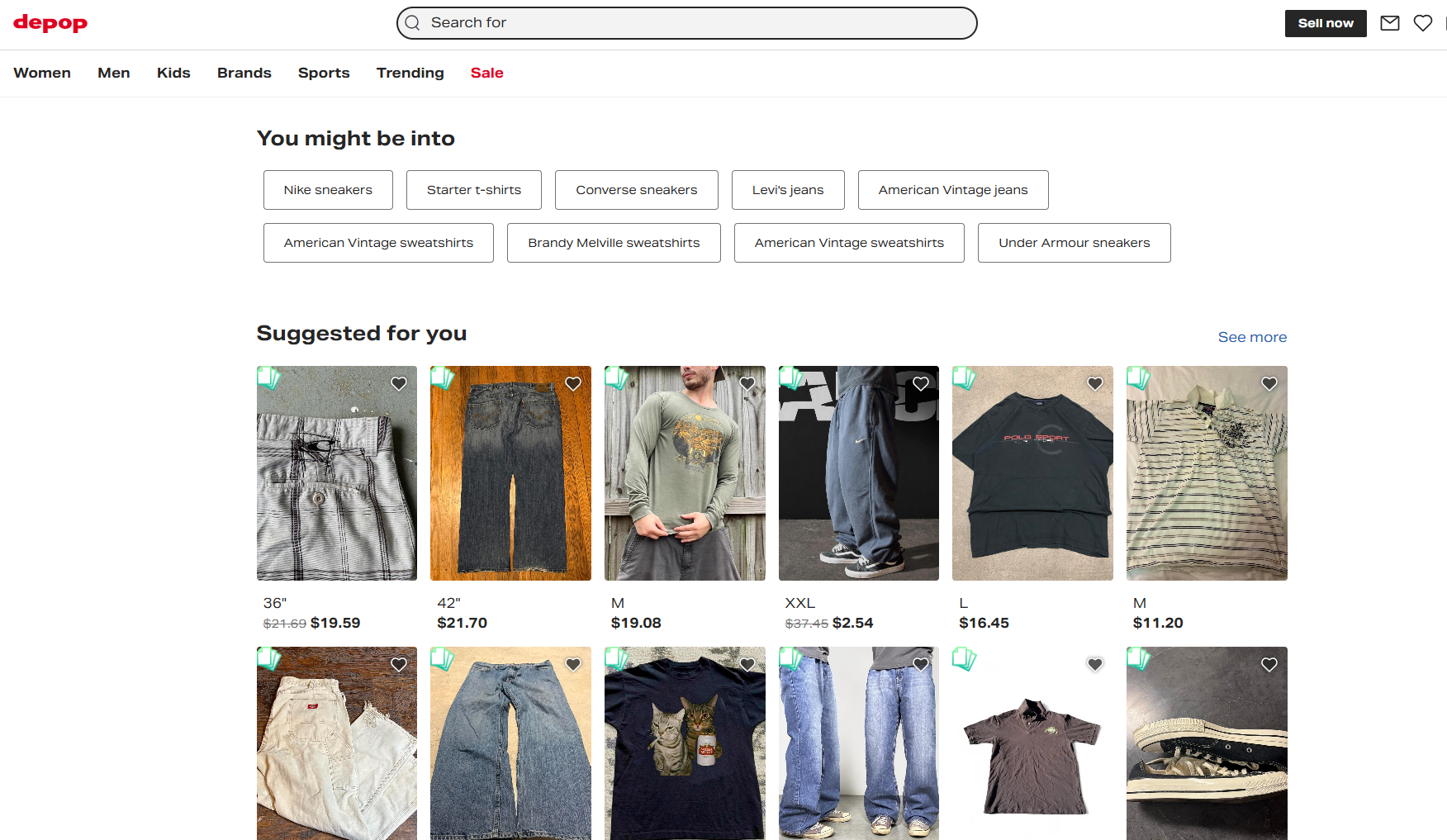
Depop has a user base of over 56 million registered users in around 50 countries. The platform’s social browsing features attract shoppers looking for Y2K, vintage, and other styles. Its focus makes it a viable alternative to Whatnot if you’re only selling fashion and accessories.
Whatnot vs. Depop: Buyer profile
Whatnot buyer profile
- Whatnot’s early growth and core market were in collector-focused categories such as trading cards, sports cards, and other collectibles. But the overall audience now increasingly engages with fashion, electronics, and other categories.
- Most Whatnot users shop through livestreams rather than browsing static listings. Many buyers follow specific sellers, attend scheduled shows, and make purchasing decisions during live auctions where bidding drives competition and urgency.
- Interaction plays a major role in the buying experience. Buyers expect hosts to demonstrate products, answer questions, and engage throughout the stream. Strong live engagement builds credibility and frequently influences whether viewers place bids or complete purchases.
Depop buyer profile
- Depop attracts Gen Z and younger Millennial shoppers who browse and buy the same way they consume social media content. They prioritize personality, style, and visual appeal over mass-market products.
- Buyers gravitate toward vintage clothing, streetwear, modern trends, and unique pieces that help them express their individuality. Distinctive and hard-to-find items often generate the most interest and command higher prices.
- Strong product presentation plays a major role in sales success. High-quality photos, authentic styling, and eye-catching listings can be just as important as the item itself when attracting buyers.
Buyer profile winner
Depop wins because it has a more defined buyer base, making it easier for sellers to understand customer preferences. Whatnot buyers vary widely by category and seller, and they take time to appeal to, so you can grow an audience.
Whatnot vs. Depop: Fees and payouts
Whatnot fees and payouts
- Whatnot charges a commission, ranging from 4% to 8% of the sale price, depending on the category. Categories such as sports card singles, toys, clothes, and all other items besides coins fall under the 8%. Coins are only 4%. Currently, rates apply for orders up to $1,500. On every dollar after $1,500, Whatnot charges a cool 0% (for select categories).
- All sellers also pay a payment processing fee of 2.9% plus $0.30 per order.
- For most U.S. sellers, earnings become available shortly after the buyer receives the item. Once released, direct deposits typically reach your bank account within 1 to 3 business days. New sellers may face temporary payout holds while Whatnot verifies account activity and establishes selling history.
- Sellers in countries other than the U.S. follow a different payout schedule that includes delivery confirmation and an additional settlement period before funds are released.
- Qualified sellers in the United States, Canada, and Japan can enroll in Whatnot's Early Payout Program, which releases earnings once a shipping label is generated instead of waiting for delivery.
Depop fees and payouts
- Depop removed selling fees for U.S. and U.K. sellers in 2024. It’s one of the few major marketplaces that often charges no commission on sales in those regions.
- U.S. sellers pay a 3.3% + $0.45 payment processing fee per order, while U.K. sellers pay 2.9% + £0.30 per transaction.
- Sellers outside the U.S. and U.K. pay a 10% marketplace fee plus payment processing charges. Depop applies these fees to the total order value, including shipping.
- For U.S. sellers, Depop typically makes funds available a few days after an item is marked as delivered (often about 2–3 working days), or after a fallback waiting period if delivery can’t be confirmed. Once released, payouts usually take about 2–5 business days to reach your bank account.
Fees and payouts winner
Depop wins because it offers a simpler and lower-cost fee structure if you’re in the U.S. or U.K. Whatnot's early payout program is a valuable perk, but you need to demonstrate a history of good service. Depop's lower overall fees make it the stronger choice for most sellers focused on maximizing profit.
Whatnot vs. Depop: Listing and discoverability
Whatnot listing and discoverability
- Product discovery centers on the "For You" feed, which recommends live shows based on viewing history, followed sellers, saved shows, and category interests. Sellers increase visibility by attracting viewers and maintaining strong engagement throughout their livestreams.
- Sellers can also be discovered through category browsing and paid Promote Tools placements.
- Success on Whatnot depends heavily on engagement. Sellers often grow their audience through social media promotion, collaborations with other creators, and active involvement in the broader Whatnot ecosystem.
- Community-driven features also help sellers expand their reach. One of the most popular is the Raid feature. This allows hosts to send viewers directly to another seller's livestream when a show ends, creating opportunities for networking and follower growth across the platform.
Depop listing and discoverability
- Depop makes listing items straightforward. Sellers can upload up to 8 photos, write a description, add up to 5 hashtags, set a price, and select a shipping method. Add optional listing attributes such as color, style, source, and age to improve search visibility.
- To speed up the process, Depop includes an AI listing tool for sellers in the U.S., U.K., Canada, Australia, and Ireland. Sellers can upload a photo and automatically generate a draft description along with suggested details such as category, brand, and color.
- All sellers also get free AI photo editing via a built-in Photoroom integration for background removal and image enhancement. Additional tools include AI pricing suggestions, predictive listing recommendations, and Boosted Listings (an optional paid promotional tool).
- Clear photos, accurate keywords, relevant hashtags, detailed item specifics, competitive pricing, and frequent listing activity all help products appear in search results and the Explore feed. Freshly listed items and highly engaged listings often receive additional visibility across the platform.
Listing and discoverability winner
Depop wins because it gives sellers visibility without building a live audience or streaming regularly. But if you love going live and interacting with buyers, Whatnot offers a great alternative.
Whatnot vs. Depop: Shipping
Whatnot shipping
- Whatnot handles shipping through discounted rates and platform-managed shipping programs, often using services like USPS Priority Mail, First Class, or Ground Advantage, which helps make fulfillment more straightforward for sellers. The platform typically requires you to ship within 2 days.
- By providing labels and standardizing key steps, Whatnot simplifies much of the fulfillment process for sellers. Self-managed shipping is only available in specific situations and to approved sellers.
Whatnot shipping costs by weight: At a glance
Depop shipping
- Depop offers flexible shipping options. Sellers can use prepaid Depop Shipping labels, provide free shipping by covering the cost themselves, or arrange their own shipping and rates. If you manage shipping on your own, you’re responsible for purchasing labels and uploading tracking information.
- Shipping on the platform includes USPS labels, tracking support, and insurance for up to $200. Depop Protection helps cover eligible transactions when sellers follow platform requirements and use supported shipping methods.
Depop shipping costs by weight: At a glance
Shipping winner
Depop wins because it gives sellers flexibility by offering platform-generated labels and seller-managed shipping. Whatnot’s per-weight rate is generally cheaper than Depop's, but it has stricter shipping timelines and doesn’t allow self-managed shipping. However, meeting Whatnot’s timelines often results in earning more buyer trust.
Whatnot vs. Depop: Return policies
Whatnot return policies
- Whatnot doesn’t offer a universal “return for any reason” policy. But it does set specific time limits for requesting refunds under its Buyer Protection Policy, which vary by category and region. Scenarios include items that arrive damaged, never arrive, or differ substantially from the seller's description.
- Buyers can’t usually request a refund simply because they changed their mind. Whatnot provides sellers with stronger protection against returns based solely on buyer preference or post-purchase regret.
- When Whatnot approves a claim, the refund is issued to the buyer's original payment method. Processing times vary by payment provider, but many buyers receive their funds within a few business days after the claim is resolved.
Depop return policies
- Depop doesn’t allow returns for buyer remorse or change-of-mind purchases. Buyers can request a refund if an item never arrives or is significantly different from the listing description.
- Most disputes must be filed within 30 days of purchase. Depop reviews claims and determines whether a refund is warranted, with return shipping handled on a case-by-case basis.
- Sellers receive protection on eligible transactions when they follow Depop's shipping and tracking requirements.
Return policy winner
Whatnot and Depop tie for their return policies. Both platforms limit returns to legitimate issues such as missing, damaged, or misrepresented items and offer strong protection against buyer's remorse claims. Neither platform provides a broad, no-questions-asked return policy, making seller protections relatively comparable.
What real users are saying
After searching real user feedback on sites like Facebook, Reddit, and Trustpilot, I found that users had the following things to say:
Whatnot pros
- A Whatnot buyer claimed the marketplace is great, but you need to consider the seller’s rating before buying. (October 5th, 2025)
- One buyer said that they spent over $5,000 in just a few months, and only a few shipments had issues. (June 10th, 2026)
- A seller said that you can find success on Whatnot as long as you put in enough time. (May 15th, 2026)
Whatnot cons
- One seller said that Whatnot has poor customer support and problems with shipping. (May 12th, 2026)
- A seller complained of high shipping costs and scammers. (February 5th, 2026)
- Although there are great items for sale, one seller noted that growing an audience and finding buyers is very difficult on Whatnot. (January 9th, 2026)
Depop pros
- One seller enjoys using Depop to earn money while managing their own shop. They feel the platform gives them a sense of independence and ownership over their business. (June 10th, 2026)
- A buyer enjoys using Depop because it makes finding items easier than visiting multiple thrift stores. They appreciate that buying secondhand is sustainable because they are reusing clothes someone doesn’t want. (January 6th, 2026)
- A Depop buyer had a positive experience when an empty package arrived, and Depop quickly issued a full refund the same day, making the process smooth and stress-free. (June 10th, 2026)
Depop cons
- After a decade of online buying and selling, a user considers Depop the worst platform because they’ve experienced multiple unshipped orders, poor seller communication, and an item that arrived damaged. (June 6th, 2026)
- A seller complained of shipping problems and inaccurate order tracking, which caused issues with a purchase. (April 27th, 2026)
- After reporting a buyer for an alleged scam attempt and submitting evidence, a seller noted that Depop customer support still sided with the buyer and didn’t address their concerns. (February 9th, 2026)
My verdict: How to choose between Whatnot and Depop
Whatnot and Depop generally fit sellers who offer different items. Here’s how to determine which one suits your selling style the best:
Whatnot is better if you …
- Sell trading cards, collectibles, sports memorabilia, coins, or other auction-friendly items.
- Enjoy hosting livestreams and interacting with buyers in real time.
- Are willing to invest time building an audience and growing a following.
Depop is better if you …
- Sell vintage clothing, streetwear, Y2K fashion, sneakers, or accessories.
- Prefer creating listings instead of running live shows.
- Want to use search visibility, hashtags, and product photos to attract buyers.
Sell on both Whatnot and Depop if you …
- Sell a mix of collectibles and fashion items.
- Are looking to maximize exposure without relying on a single platform.
- Have enough inventory to support multiple sales channels and audiences.
Don’t pick one: Sell on Whatnot and Depop with Nifty
If you're still weighing Whatnot vs. Depop, don’t choose one. Sellers who reach the most buyers list on both. Nifty makes that possible without doubling your workload, so you can stop comparing and start stacking sales across both marketplaces.
Here's why Nifty's so helpful:
- Customized AI listing: Snap a pic and let Nifty's AI build a complete listing, with SEO-optimized titles and descriptions, and trending hashtags already filled out for you. You can even customize how AI writes your listings to follow your unique style.
- Crosslist now: With a couple of clicks, post your items across Whatnot, Mercari, Poshmark, eBay, Depop, and Etsy. No copy-paste clutter and no multi-tab hopscotch. (More marketplaces coming soon!)
- Automatic delisting? Handled: When you make a sale, Nifty's sales detection auto-delists that item from every marketplace. Say goodbye to double-selling disasters and "sorry, it's already gone" apology messages.
- Bulk tools = no busywork: Share and relist daily in just a few clicks. You can even schedule drafts to go live while you sleep and set automatic discounts that run deeper over time.
- Analytics and profits are real: Track sales, fees, top performers, and slow movers in one clean dashboard, so you can actually see what's working and what's just dead space. You can also set and track seller goals directly from your home screen.
Nifty pays for itself in just a few weeks. Start with a 7-day free trial and see how Nifty can help you sell on Whatnot and Depop without the chaos of managing them separately.
FAQs
1. Is Whatnot or Depop better for selling vintage clothing?
Depop is better for selling vintage clothing. That’s because its audience of Gen Z and younger Millennial shoppers actively seeks vintage, Y2K, and streetwear styles. Strong photos and relevant hashtags help you reach buyers faster and avoid slow-moving inventory.
2. Can you sell sneakers on Whatnot and Depop?
Yes, you can sell sneakers on both Whatnot and Depop. Whatnot suits auction-style listings that often drive up prices through competitive bidding. Depop reaches fashion-forward buyers browsing by style. Listing on both platforms maximizes exposure and reduces the risk of inventory sitting unsold.
3. Does Depop charge lower fees than Whatnot?
Yes, Depop charges lower fees than Whatnot for U.S. and U.K. sellers. For these sellers, it only applies a payment processing fee of 3.3% + $0.45. Whatnot charges a 4–8% commission depending on category, plus a processing fee of 2.9% + $0.30 per order. For high-volume fashion sellers, Depop's structure cuts per-sale costs significantly.


.png)
.png)
.png)