
6 best SellerChamp alternatives for more sales (2026)
.png)
The best SellerChamp alternatives are SellerCloud for multi-warehouse operations, Linnworks for large fulfillment teams, and Nifty for crosslisting and reselling.
SellerChamp works great for larger operations, but if you don’t need multi-channel warehouse management, you’re better off getting a cheaper alternative.
I evaluated six SellerChamp alternatives across crosslisting, multi-channel management, and marketplace integration to see which seller types fit each tool. By the end, you’ll learn which one works best for your listing and inventory management workflows, whether you’re a part-time reseller or established retailer.
6 best SellerChamp alternatives: TL;DR
- Sellercloud: Best for multi-warehouse operations
- Linnworks: Best for large fulfillment teams
- Nifty: Best for crosslisting and resellers
- Veeqo: Best for Amazon-focused sellers
- Cin7: Best for retail inventory management
- Rithum: Best for enterprise marketplace operations
How to choose the right SellerChamp alternative for you
Here’s how to figure out which SellerChamp alternative works best for your selling workflows:
Choose Sellercloud if you …
Run a multi-warehouse operation and need inventory, fulfillment, and order routing handled in one enterprise tool.
Choose Linnworks if you ...
Are a growing or established e-commerce business that needs rules-based order routing and forecasting.
Choose Nifty if you ...
Are listing across eBay, Poshmark, Whatnot, Mercari, Depop, and/or Etsy and you want AI-generated listings plus auto-delisting without enterprise complexity.
Choose Veeqo if you ...
Mainly sell on Amazon and ship dozens to hundreds of orders daily, and you want inventory, shipping, and warehouse tools bundled at low costs.
Choose Cin7 if you …
Run a retail or wholesale business that needs a B2B ordering portal alongside inventory management.
Choose Rithum if you ...
Manage a large catalog across dozens of marketplaces and need enterprise-level listing tools and dropship order routing.
Stick with SellerChamp if you ...
Are already deep into its automation rules and workflows and don't want to rebuild that setup elsewhere. It still works for sellers who need warehouse and purchasing features alongside listing and inventory sync, and who don't mind a custom quote.
Why look for SellerChamp alternatives
Although the tool helps multichannel sellers manage inventory, many sellers look for SellerChamp alternatives because it has a complex interface and only offers a custom quote, which implies higher pricing. Here’s why sellers seek other tools:
- Higher costs for smaller sellers: If you’re a large retailer or e-commerce business, SellerChamp customizes a price. But it doesn’t offer standard monthly plans for between $20 and $100 that accommodate individual sellers or small businesses.
- More features than some sellers need: SellerChamp includes warehouse management, purchasing, and other operational features. These features are overkill for folks who only need to create listings, sync inventory, and automatically delist sold items.
- Learning curve: SellerChamp gives users plenty of control over workflows and automation rules. But setting them up and configuring them takes time. Sellers strapped for time may want a tool with minimal configuration.
- Better fits exist for specific workflows: Not every reseller runs the same business. Some sellers prioritize AI listing creation. Others care most about speed, marketplace coverage, or ease of use. A more specialized tool may deliver a better day-to-day experience if those features matter more than enterprise inventory management.
6 best SellerChamp alternatives: At a glance
1. Sellercloud: Best for enterprise multichannel operations
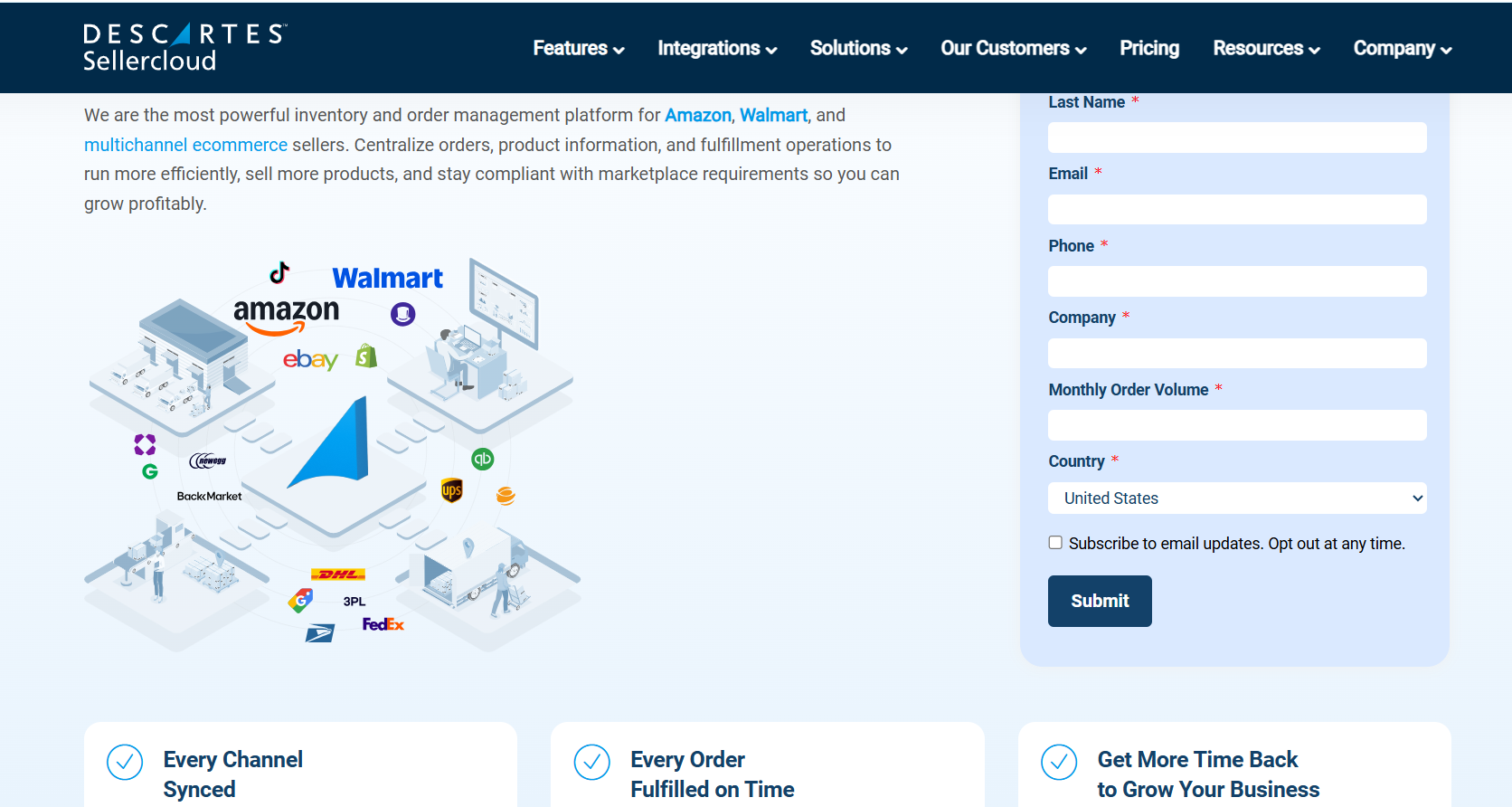
Sellercloud stands out for businesses that need inventory, warehouse, and order management in one enterprise tool.
“Sellercloud's strength is def the customization – if you've got weird workflows or need custom integrations, they'll build it.” (Consultant, Reddit; January 12th, 2026)
Key features
- Centralized inventory: Syncs inventory across multiple sales channels to help prevent overselling.
- Warehouse management: Supports receiving, picking, packing, transfers, and fulfillment across multiple warehouses.
- Extensive integrations: Connects with marketplaces, shopping carts, shipping carriers, accounting software, and third-party logistics providers.
Sellercloud pros
✅ Warehouse depth: Supports multi-warehouse inventory, transfers, fulfillment, and complex warehouse operations.
✅ Unlimited users: Base plans include unlimited users without per-user licensing fees.
✅ Many integrations: Supports numerous marketplaces, e-commerce platforms, carriers, accounting systems, and 3PL providers.
Sellercloud cons
❌ Enterprise pricing: Starting pricing is over $1,000, targeting larger businesses.
❌ Complexity: Sellercloud includes enterprise operational tools that many casual resellers will never use.
Best for
- Multi-warehouse e-commerce businesses
- High-volume marketplace sellers
- Wholesale and large retail operations
- Complex fulfillment workflows
Pricing
Start using Sellercloud for $1,349/month.
2. Linnworks: Best for large fulfillment teams and dropshippers
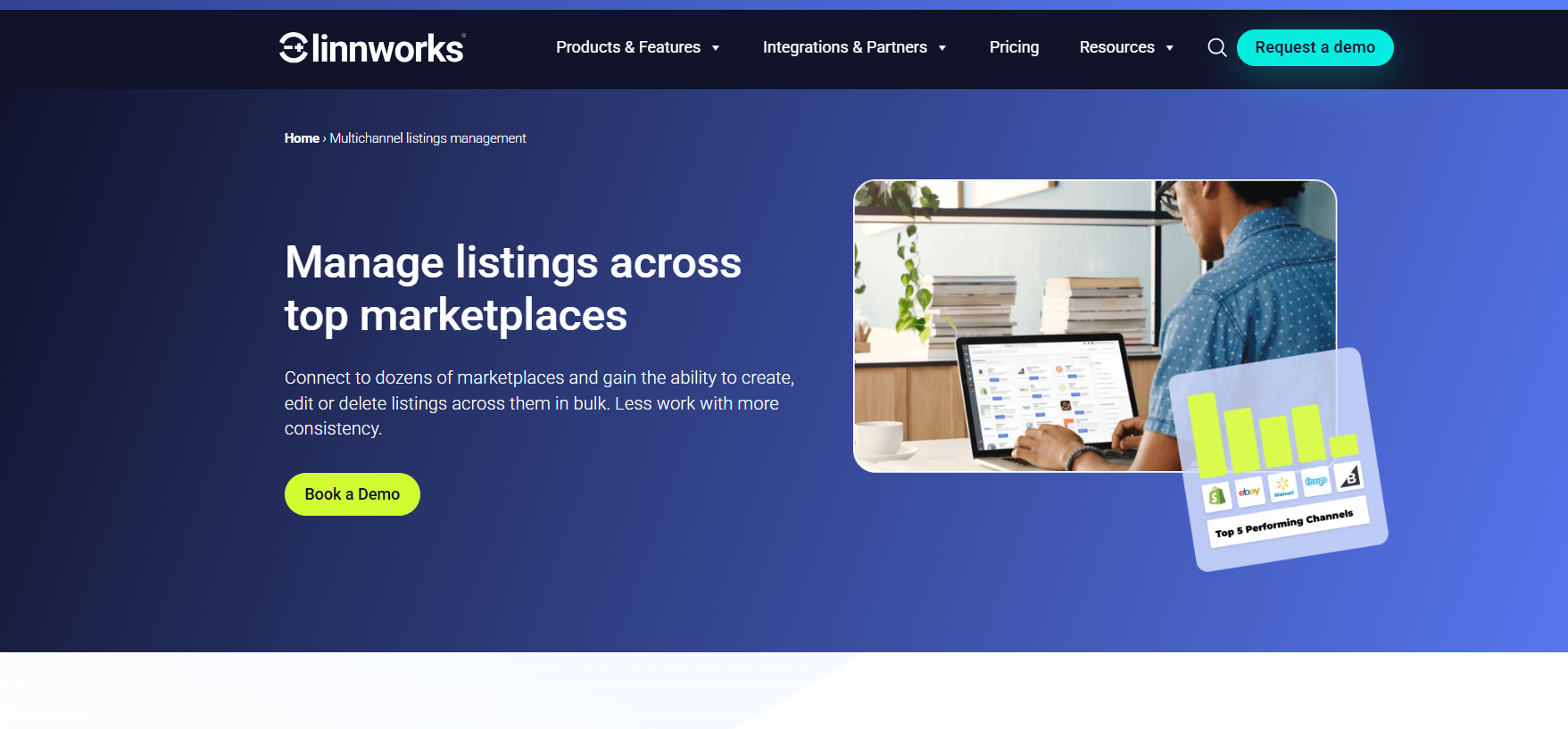
Linnworks helps growing and established e-commerce businesses manage inventory, fulfillment, shipping, and multichannel sales from one centralized tool.
“We used Linnworks for 2 years, and the team was great and very supportive, especially considering the price of the solution. We had to move away as we are not building out marketplaces as we had planned too, so could not extract the value.” (Tom D., Trustpilot; May 5th, 2026)
Key features
- Real-time inventory sync: Updates stock levels across all connected channels the moment inventory moves.
- Rules-based order routing: Automatically sorts, prioritizes, and routes incoming orders.
- Analytics and forecasting: Pulls all channel data into consolidated reporting, so sellers can make replenishment and pricing decisions quickly.
Linnworks pros
✅ Proven tool: Linnworks has been in the e-commerce operations market for many years and is a mature tool.
✅ Strong automation: Supports configurable automation rules for order processing and fulfillment.
✅ Inventory accuracy: Helps keep synchronized inventory across multiple channels.
Linnworks cons
❌ Dated interface: The dashboard feels dated and clunky compared to other tools.
❌ No public pricing: Linnworks doesn’t publish standard pricing; buyers typically contact sales for a quote.
Best for
- Multi-channel retailers
- Warehouse-based fulfillment teams
- High-volume e-commerce businesses
- Large dropshipping operations
Pricing
Get in touch with Linnworks for a custom quote.
3. Nifty: Best for crosslisting and resellers
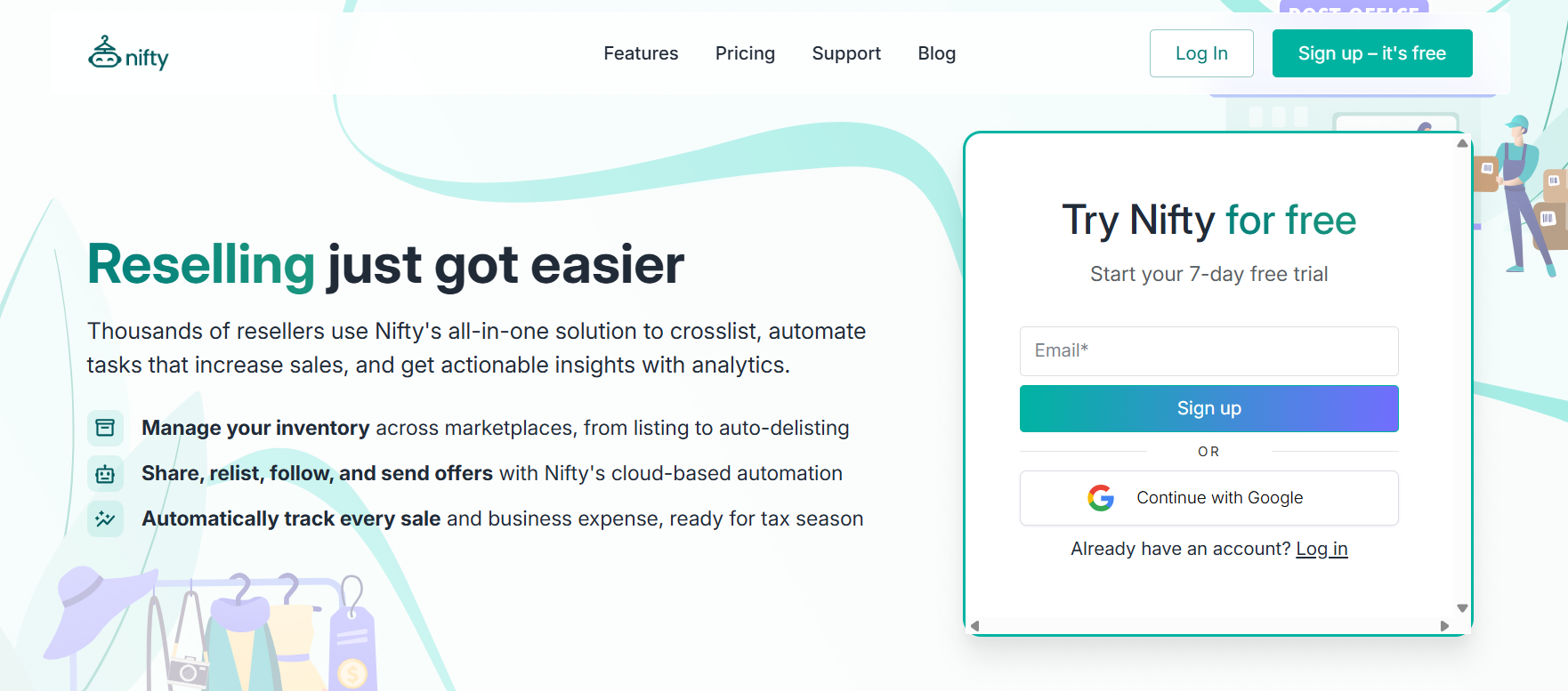
Nifty is a SellerChamp alternative for sellers and resellers who want crosslisting, analytics, cloud-based automation, and AI-powered listing generation. It’s built for sellers and resellers listing across marketplaces like eBay, Poshmark, Mercari, Depop, Etsy, and Whatnot.
“Now that I have Nifty, I am soooooooo much more excited to list. It makes the entire process much easier.” (Nifty user, Reddit; April 23rd, 2026)
Key features
- Auto-delist on sale: When an item sells on one platform, Nifty removes it from all others to prevent double-selling.
- Bulk crosslisting: Publish up to 25 listings simultaneously with marketplace-specific pricing, shipping presets, and AI-generated titles and descriptions. Start in Nifty or import from eBay before listing everywhere else.
- Light Facebook Marketplace integration: Export multiple listings into a Facebook Marketplace-ready CSV file to speed up manual uploads.
Nifty pros
✅ Mobile-access: Works on desktop, tablet, and mobile without requiring your computer to always be on or keeping tabs open with browser extensions.
✅ Poshmark automation: Automate sharing, relisting, sending offers, and following on Poshmark, using Auto Posher, Nifty’s predecessor, as a foundation.
✅ All-in-one tool: You get automation, crosslisting, and analytics all in one, so you don’t need to buy separate tools.
Nifty cons
❌ Narrow marketplace coverage: Supports only 6 marketplaces (Facebook Marketplace is lightweight) and doesn’t include Walmart, Amazon, or other larger retail channels.
❌ Heavy feature base: Nifty isn’t technical, but you will need to spend some time learning features like bulk crosslisting, bulk editing, automation, and analytics.
Best for
- Sellers who need crosslisting, automation, and analytics in one tool
- Solo resellers with large secondhand inventory backlogs
- Crosslisters expanding to 2–4 more marketplaces
- Large resellers who need fast AI listing tools and mobile access
Pricing
Start using Nifty’s Poshmark or eBay automation for $25/month.
4. Veeqo: Best for Amazon-focused sellers
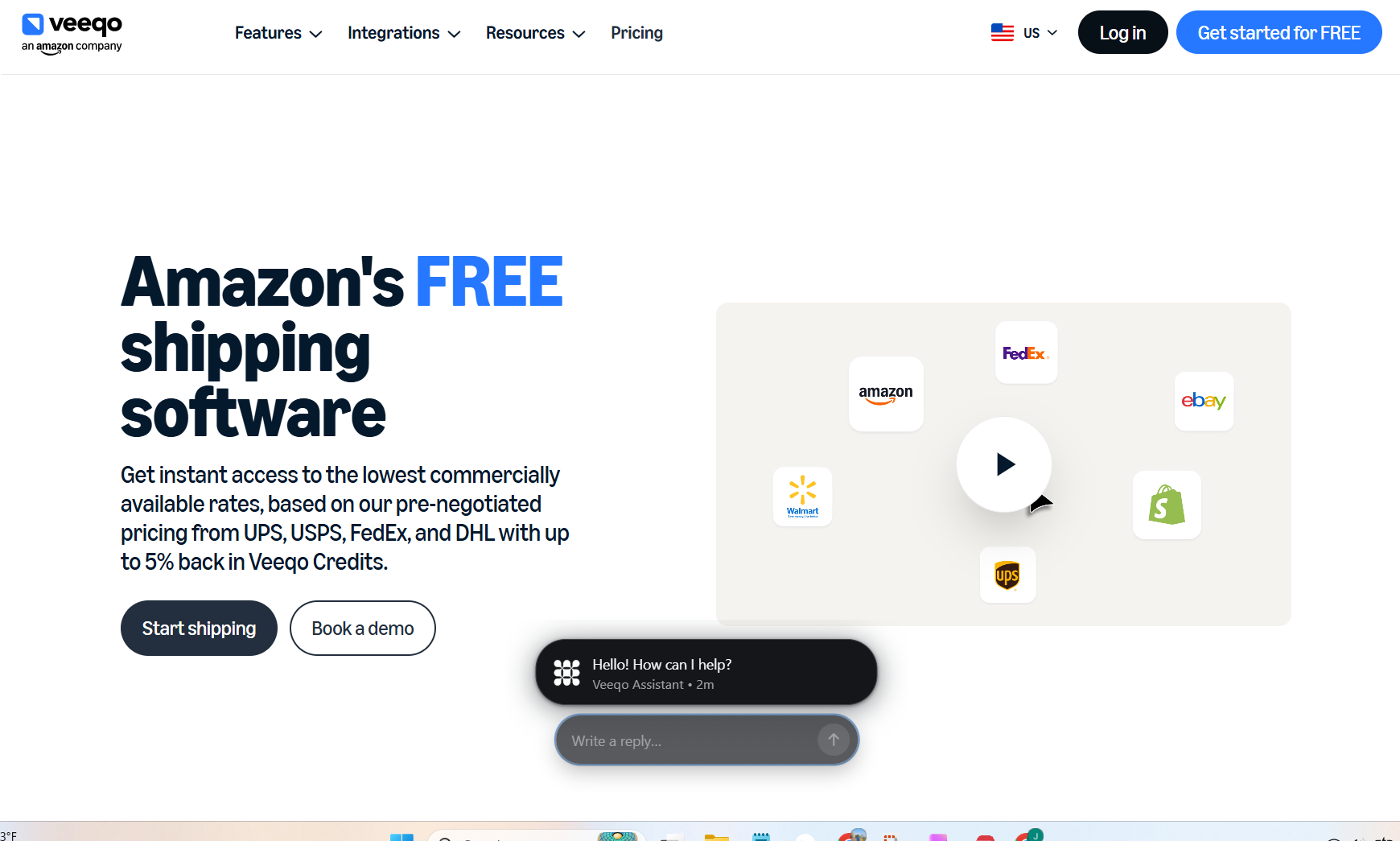
Veeqo keeps inventory synced across connected marketplaces, online stores, and warehouse locations. It suits larger sellers managing orders across several sales channels or warehouses.
“Works great once you actually get used to using it. I’ve had no problem with it and I ship 40–60 orders per day.” (Veeqo user, Reddit; January 27th, 2026)
Key features
- Inventory management: Tracks all your inventory across different warehouses and sales channels, and sends alerts when stock gets low.
- Digital picking workflows: Uses barcode scanning and guided pick routes so warehouse staff can find items faster than with paper pick lists.
- Large dashboard: Pulls orders from Amazon, eBay, Shopify, and other channels to one place.
Veeqo pros
✅ Complimentary software tools: Includes inventory, shipping, and warehouse tools.
✅ Good for large operations: Allows for unlimited users and large product listings.
✅ Quick setup: Connect sales channels and start managing inventory and shipping quickly.
Veeqo cons
❌ Owned by Amazon: Some sellers may not want to rely on software owned by a company they also compete with.
❌ Pricing increases by order size: Pricing plans get more expensive as your order volume increases.
Best for
- Sellers scaling Amazon operations
- Businesses shipping hundreds of orders daily
- Multi-warehouse inventory management
- Sellers using Amazon Seller Fulfilled Prime (SFP)
Pricing
Start using Veeqo Inventory for $19/month.
5. Cin7: Best for retail inventory management
Cin7 suits folks running e-commerce businesses, helping retailers and wholesalers manage their sales all in one place.
“Cin7 is a user-friendly software platform that makes day-to-day operations much easier. Their support team is consistently helpful and responds quickly to requests that impact our business.” (Cin7 user, Trustpilot; April 21st, 2026)
Key features
- B2B ordering portal: Lets approved wholesale customers browse products, view pricing, and submit orders online.
- Warehouse management: Supports barcode scanning, picking, packing, put-away, and multi-location inventory tracking.
- Dropship automation: Automatically creates supplier purchase orders and tracks inventory costs for dropship sales.
Cin7 pros
✅ EDI & 3PL support: Automates supply chain workflows through built-in and partner integrations.
✅ Strong wholesale tools: Supports B2B pricing, customer portals, and wholesale order management.
✅ Lower costs: Pricing starts at just a few hundred dollars monthly, which is often lower than some larger enterprise companies.
Cin7 cons
❌ Forecasting depth: Although it has basic forecasting and restocking tools, some users still might need planning functions.
❌ Software glitches: Some users have reported data sync problems, bugs, and slow customer service.
Best for
- Wholesale and retail e-commerce businesses
- Multi-warehouse inventory management
- Shopify stores adding wholesale
- Hybrid stocked and dropship inventory
Pricing
Start using Cin7 Core Standard for $349/month.
6. Rithum: Best for enterprise marketplace operations

Rithum suits large brands, dropshippers, and retailers that need to manage a large number of listings across dozens of marketplaces.
“I have had a mostly positive experience with all of our Rithum products. The customizability of the data in and out of the system between sales channels.” (Derek R., Capterra; February 3rd, 2025)
Key features
- Connects with hundreds of marketplaces: The tool connects with more than 600 marketplaces and retailers worldwide, per Rithum's current published figures.
- Listing tools: Manage all product data and listings on your dashboard. Rithum also tracks errors and alerts you before they cause larger problems.
- Dropshipping features: Run large dropshipping programs with tools that support supplier setup, order routing, and product uploads.
Rithum pros
✅ Unified retail insights: Combines inventory, order, product, and advertising data to help measure retail performance across major marketplaces.
✅ Handles large catalogs: Supports large SKU counts across multiple sales channels without sacrificing inventory visibility.
✅ Flexible order routing: Routes orders automatically based on warehouse, shipping requirements, or product attributes.
Rithum cons
❌ Operational complexity: Warehouse, fulfillment, and integration capabilities exceed what many growing sellers actually need.
❌ Enterprise-focused pricing: Custom quotes and sales-led contracts make costs difficult for smaller businesses to justify.
Best for
- Enterprise marketplace brands
- Expanding dropshipping supplier networks
- Managing dozens of sales channels
- Retail media and marketplace growth
Pricing
Contact Rithum’s sales team for a quote.
How to evaluate SellerChamp alternatives
Every SellerChamp alternative solves a different problem and caters to specific audiences with marketplace coverage and pricing structure. Here’s how to evaluate each alternative:
- Marketplace coverage: Confirm the marketplaces you already sell on and think about those you may add later. For instance, some, like Poshmark and Depop, specialize in clothing; others, like Amazon and Walmart, suit traditional e-commerce sellers.
- Inventory management: Choose inventory tools that match how you operate. If you only crosslist products, simple inventory syncing may be enough. Managing warehouses or multiple fulfillment locations requires tools with deeper inventory and warehouse capabilities.
- Automation capabilities: Compare bulk listing functions, pricing rules, shipping presets, order routing, and workflow automation. The right automation should eliminate repetitive work without forcing you to manually monitor every marketplace.
- Pricing structure: Compare how each tool charges for its service. Some tools publish affordable monthly plans, while others require custom quotes or increase costs as order volume grows. Make sure pricing will continue to fit your budget as your business expands.
Nifty: Our favorite SellerChamp alternative
If you're searching for SellerChamp alternatives because sync errors, pricing glitches, or slow support are costing you sales, try Nifty. It's built by resellers specifically for resellers who need reliable crosslisting and automation. List and manage items across eBay, Etsy, Poshmark, and more, all from one place, without the oversells and interface headaches that send people looking for a switch in the first place.
Here's why Nifty's so helpful:
- Customized AI listing: Snap a pic and let Nifty's AI build a high-quality listing, with SEO-optimized titles and descriptions, and trending hashtags already filled out for you. You can even customize how AI writes your listings to follow your unique style.
- Crosslist now: With a couple of clicks, post your items across Whatnot, Poshmark, eBay, Mercari, Depop, Etsy, and a light Facebook Marketplace integration. No copy-paste clutter and no multi-tab hopscotch. (More marketplaces coming soon!)
- Automatic delisting? Handled: When you make a sale, Nifty's sales detection auto-delists that item from every marketplace. Say goodbye to double-selling disasters and "sorry, it's already gone" apology messages.
- Bulk tools = no busywork: Share and relist daily in just a few clicks. You can even schedule drafts to go live while you sleep and set automatic discounts that run deeper over time.
- Marketplace-specific pricing rules: Save pricing templates for each marketplace and apply them automatically during bulk crosslisting to keep listings consistent without manual edits.
- Shipping presets: Apply saved shipping settings to multiple listings at once, or let AI select the appropriate shipping option.
- Analytics and profits are real: Track sales, fees, top performers, and slow movers in one clean dashboard, so you can actually see what's working and what's just dead space. You can also set and track seller goals directly from your home screen.
Nifty pays for itself in just a few weeks. Start with a 7-day free trial and see how Nifty can help you crosslist and avoid oversells and pricing surprises.
FAQs
1. Is SellerChamp worth it for small resellers?
No, SellerChamp isn’t worth it for small resellers. It only offers custom enterprise pricing with no standard monthly plans under $100. Smaller sellers get better value from tools like Nifty, which starts at $25/month and reduces overspending on unused warehouse features.
2. Which SellerChamp alternative supports the most marketplaces?
The SellerChamp alternative that supports the most marketplaces is Rithum, which connects with over 600 marketplaces and retailers worldwide. Rithum is a viable option for large retailers, wholesalers, and enterprise brands.
3. Can you migrate from SellerChamp without losing your listings?
Yes, you can migrate from SellerChamp without losing your listings. You'll need a SellerChamp alternative that imports your existing listings from connected marketplaces before you crosslist them elsewhere. It should also integrate with the same marketplaces that you used when listing with SellerChamp.



.png)